Broken Fae

See Full Breakdown Below
Skip To...
    Add a header to begin generating the table of contents

    Goal

    I often daydream of tiny worlds teeming with life. Lately, I have had a growing wish to use my skills to bring them to life. These tiny world fantasies evolved into an adventure level by drawing reference from games I enjoy deeply.

    Here, my goal is to demonstrate rapid prototyping skills, while also employing techniques to include world-building embellishments in every stage of that process.

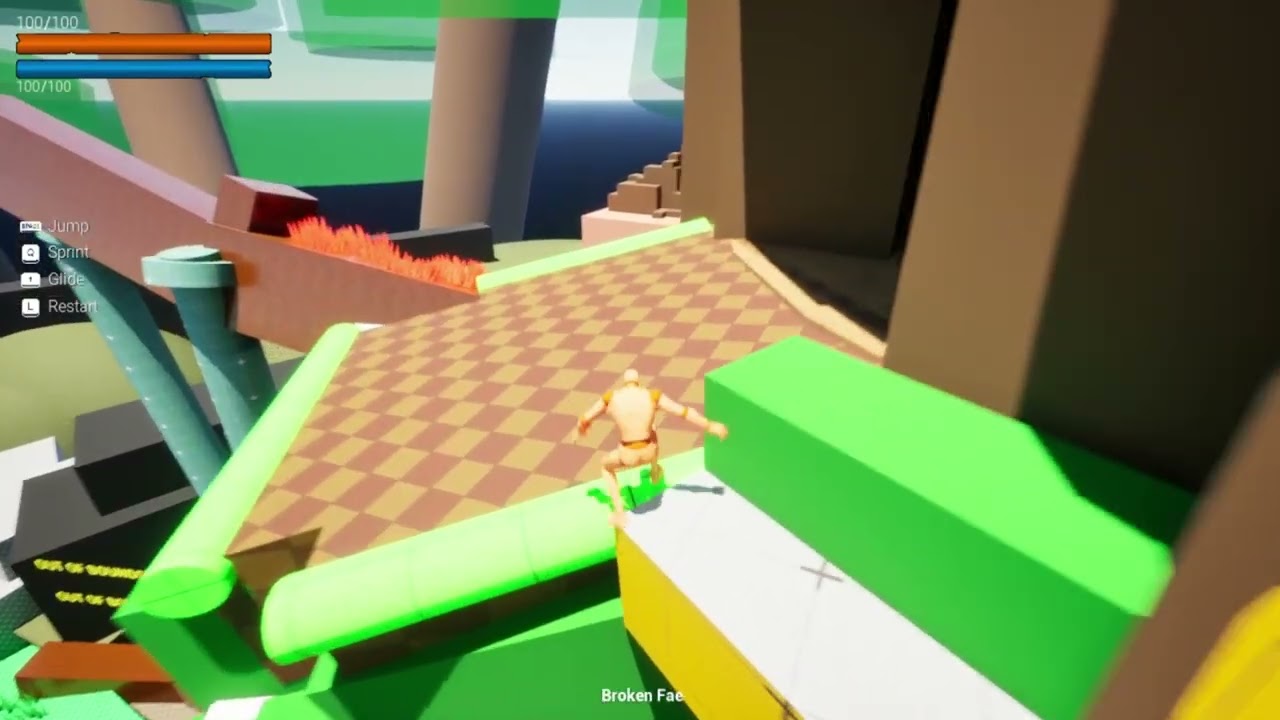
    • Showcase verticality in a natural setting
    • Provide clear visual language for traversal
    • Explore wind as a gameplay mechanic

    I sought mentorship from industry mentors like Brandon Dolinski and Nathan Kellman to continue to expand my greyblocking skillset. Their feedback challenged me to grow as a committed life-long learner of game design.

    Level Overview & Technique Highlights

    Setting and Story

    Welcome to a dangerous world where powerful insect queens rule over hordes of the undead… and other subjects imbued with even darker magick.

    A single, ancient tree is the central location for this whole level, as the player character is roughly the size of an a small bird that fits in your hand. Or a G.I. Joe action figure. 

    The story follows an injured fairy who pushes through enemy territory in search of answers. And the most critical question on his list right now is how to cease the unrelenting winds that are blocking him from gliding to the next destination on his journey.

    Ultimately, this fairy’s goal is to unearth truths about the source of Fae magick. But to get deeper into the jungle, the player will fight through hordes of giant insects, first; in order to restore balance within the realms along his path.

    Technique Highlight 1: Designing for approachable traversal gameplay
    An early iteration of the level which focused on grappling hook as primary means of traversal

    Technique and use-case I showed flexibility as I adapted traversal level elements and reimagined level flow when playtests showed the core gameplay feature of grappling hook was not supporting clear & engaging playing paths.

    Context of use-case There were many constraints introduced by working with such a large degree of verticality and ascending a large cylinder. These added friction with Sekiro-style grappling hook mechanics, and were preventing me from iterating quickly towards an acceptable standard for approachability on golden path.

    Technique Detail:

    • Level Element 1: Initially, I used orange wing-shaped volumes to indicate the areas where Fae would be pulled on firing his grappling hook
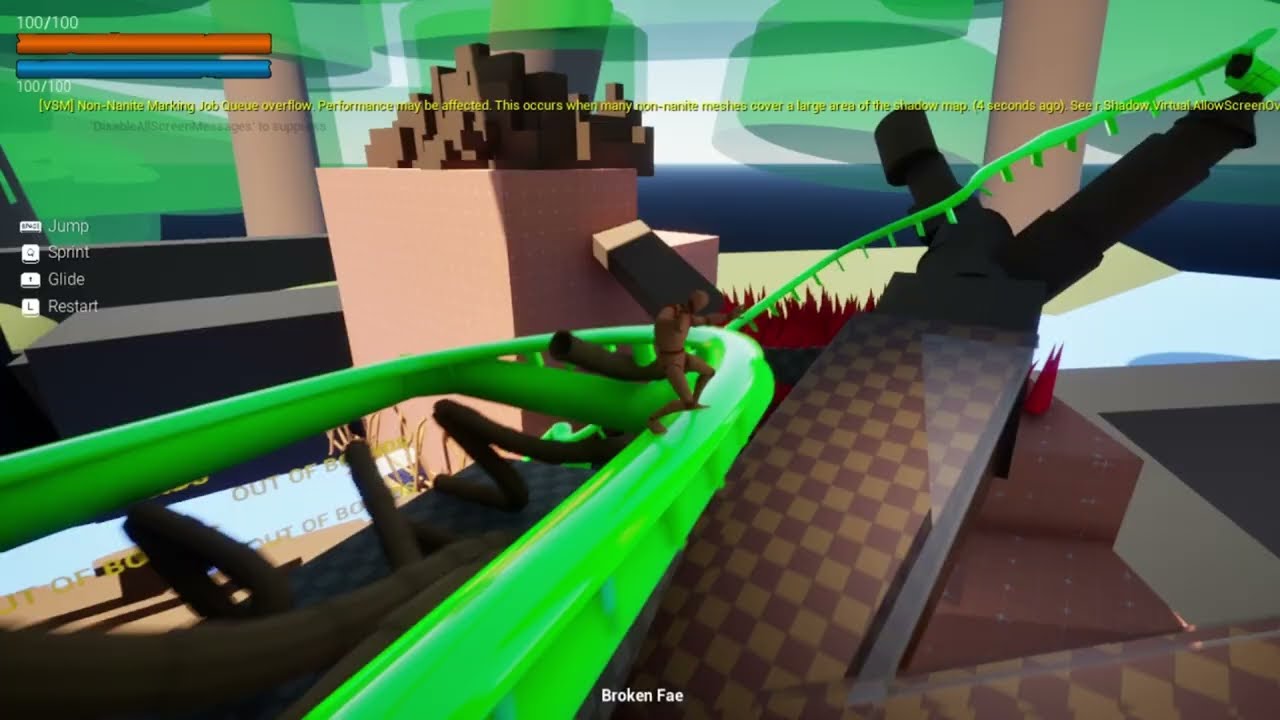
    • Level Element 2: Cut grappling hook and replaced it with expanded emphasis on gliding over air vents and sliding on green vines
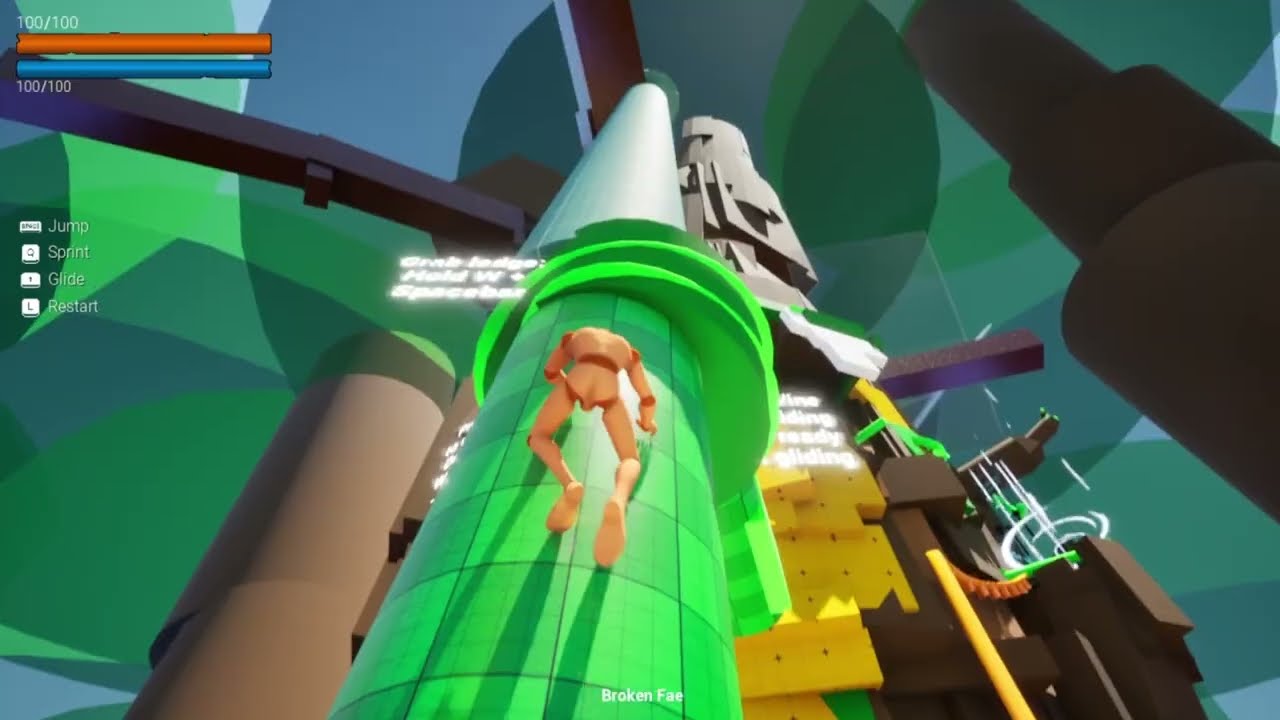
    • Level Element 3: Introduced wall-running earlier to reinforce high value moments discovered throughout iteration on the middle of level and boss fight arena

    Walkthrough

    Skip to ↓
    4 Videos
    Beat Overview

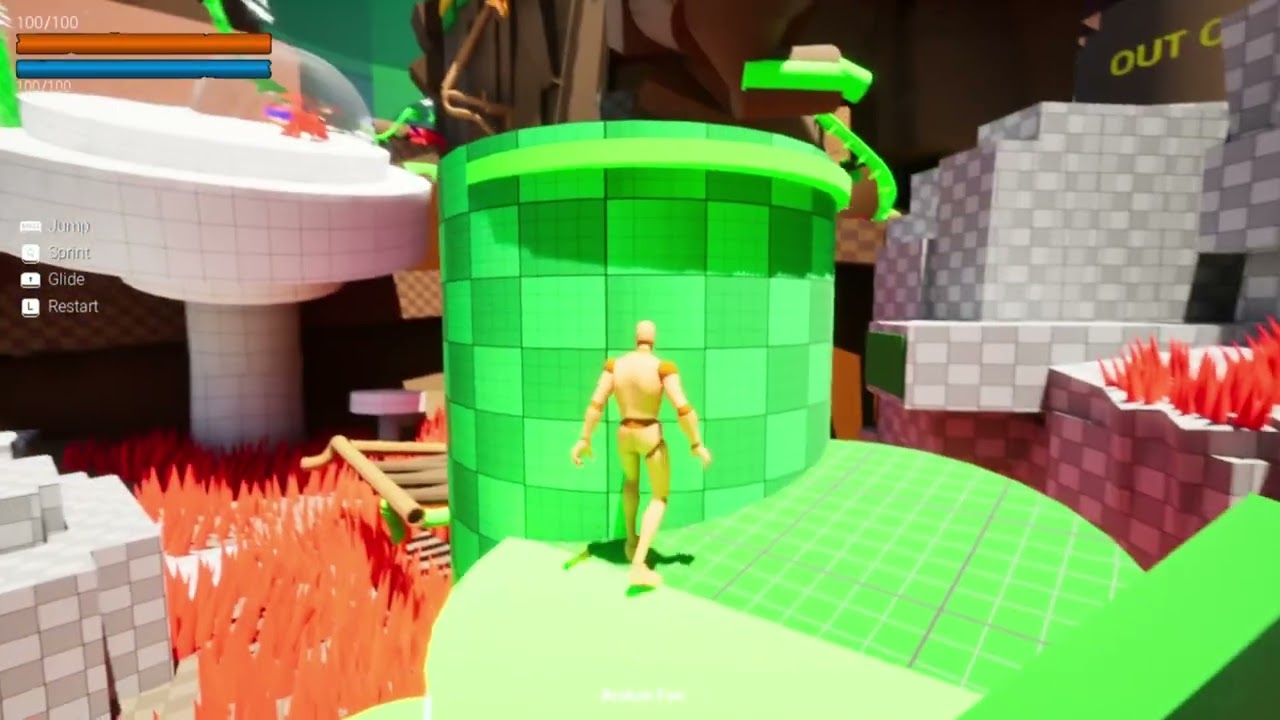
    Beat 1 + 2: Forest Floor Start

    Fae starts at a fallen tree stump, and notices red blight. Now he must jump down and show off his wall-running skills to advance to the base of the elder tree. He pick off an unsuspecting termite, and then glides and climbs his way up into the roots of the tree. 

     Beats 1 + 2 chart.

    Process Breakdown

    1. Research, Ideation & Planning

    Analyzing Games: I drew inspiration from games like Sekiro: Shadows Die Twice, Monster Hunters: Wilds, and Grounded 2 to guide my level design.

    Researching Real-World References: I studied trees, especially hollowed and inhabited ones to add authenticity.

    Exploring Other Media: I looked at Pan’s Labyrinth and Aliens (1982 comic) for insights on depicting nature in gothic horror.

    2. Level Design Document

    TO BE CONTINUED.